If you run a business in America, you already know this: mailing costs don’t seem big until they suddenly do. One envelope is nothing. Fifty is manageable. Five hundred a month? Now you’re talking about a real line item — one that quietly grows while everyone is busy watching bigger numbers.
And here we are, stepping into 2026, with Forever Stamps sitting at $0.78 after the 2025 adjustment. USPS has already made it clear — no price changes before July 2026, but after July? Yes, the increase is coming. They’ve said it publicly, and the pattern is as predictable as sunrise. (USPS announcement: https://news.usps.com/2025/09/24/usps-announces-no-stamp-price-changes-for-january-2026/)
So the question isn’t if prices will rise.
It’s how prepared your business will be when they do.
And that’s where this guide comes in — not as a checklist, but as a conversation. A flow. A rhythm. Something you can read with a cup of coffee while thinking, “Okay… this actually makes sense.”
The Real Reason 2026 Matters More Than Previous Years
Let’s be honest: the last few years have been weird. Prices move faster than anyone likes. Supply chains behave like moody teenagers. And inflation — well, it doesn’t disappear just because we want it to.
Businesses across the U.S. are planning more cautiously. They’re stocking earlier. They’re budgeting tighter. They’re looking at small expenses with big consequences.
Forever Stamps fall right into that category.
Why?
Because stamps don’t behave like normal products. They don’t expire. They don’t degrade. They don’t lose value. They only go up — slowly, steadily, annoyingly.
And in a world where the dollar’s purchasing power keeps slipping, a Forever Stamp is one of the few things that actually beats inflation.
That’s why 2026 is a strategic year.
Not dramatic. Not chaotic. Just… strategic.

A Conversation With a CFO Who Tracks Stamps Like Fuel Costs
Editor’s Pick: Bulk Stamps
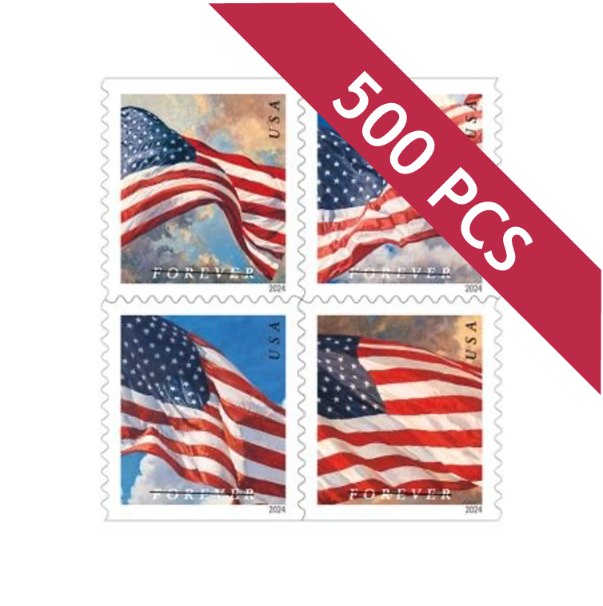
Last month, I spoke with a CFO of a logistics company in Ohio. Let’s call him Daniel. He’s the kind of guy who notices when the price of printer paper goes up by 3 cents.
He told me:
“We used to buy stamps whenever we ran out. Now we buy them like we buy diesel — in advance, in bulk, and before the next price bump.”
I asked him why he cared so much about something as small as stamps.
He leaned back, rubbed his forehead, and said:
“Because small numbers multiplied by time become big numbers. And big numbers multiplied by mistakes become headaches.”
He wasn’t wrong.
And he wasn’t exaggerating.
The Math That Every Business Owner Should See (Even If You Hate Math)
Let’s do the math together — not the boring kind, but the kind that makes you go, “Oh… now I get it.”
Scenario: You mail 500 envelopes a month.
That’s 6,000 envelopes a year.
Current price (2026): $0.78
Expected post‑July price: $0.83
Now let’s compare buying early vs. buying late.
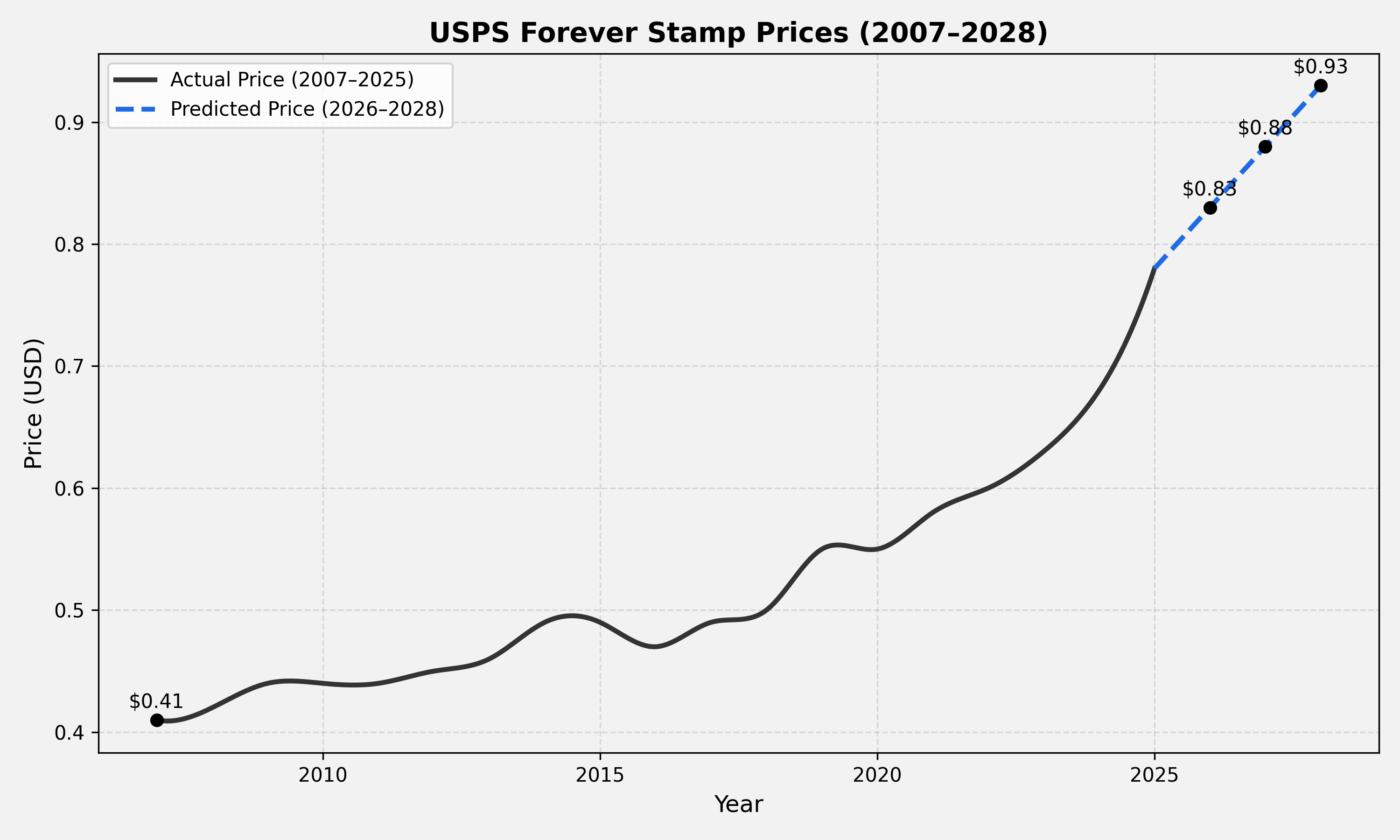
Table: Cost Comparison for 6,000 Annual Mailings
| Timing | Price per Stamp | Total Annual Cost |
|---|---|---|
| Buy before July | $0.78 | $4,680 |
| Buy after July | $0.83 | $4,980 |
That’s a $300 difference for doing nothing except buying earlier.
But here’s where it gets interesting — and where many business owners get tripped up.
What if you buy discounted bulk stamps?
Let’s say you find a real, authentic, low‑discount seller offering 20% off.
- Discounted price: $0.624
- Cost for 6,000 stamps: $3,744
Now compare that to buying after July at full price:
- $4,980 vs. $3,744
- Savings: $1,236
That’s not small.
That’s not “nice to have.”
That’s a budget‑line victory.
But here’s the trap — and it’s a big one.
Fake stamps are always cheap. Too cheap. Suspiciously cheap.
They stay at $19.99 or $29.99 for “100 stamps.”
They never rise.
They never follow USPS pricing.
They never behave like real products.
If you see a discount above 50%, it’s fake.
If you see it on Temu or Shein, it’s fake.
If the packaging looks “a bit off,” it’s fake.
If the price makes you think “wow,” it’s fake.
One office manager told me she bought a batch “just to test.”
Her inner monologue afterward?
“Why did I do that. Why. Why. Why.”
Half the stamps were rejected.
The rest looked weirds (her word).
She had to reorder everything — wasting time, money, and patience.
Buying fake stamps doesn’t save you $100.
It costs you $300.
Sometimes $500.
And it costs you time — the one thing no business has enough of.
Why Buying Before July 2026 Is a Strategic Move for 2027 and 2028
Here’s the part most people don’t think about:
Stamps bought in 2026 will still be valid in 2027 and 2028 — at 2026 prices.
If you know your mailing volume, even roughly, you can lock in two years of savings.
Let’s say your business mails:
- 300 pieces a month
- 500 pieces a month
- 1,000 pieces a month
Here’s what that looks like over three years.
Table: 3‑Year Projection (2026–2028)
| Monthly Volume | 3‑Year Total Mailings | Cost if Bought Early (2026 price) | Cost if Bought Year‑by‑Year (with increases) |
|---|---|---|---|
| 300 | 10,800 | $8,424 | ~$9,800–$10,400 |
| 500 | 18,000 | $14,040 | ~$16,300–$17,400 |
| 1,000 | 36,000 | $28,080 | ~$32,600–$34,800 |
The difference is thousands.
Not hundreds — thousands.
And that’s why smart businesses treat stamps like inventory, not office supplies.

Where U.S. Businesses Should Actually Buy Stamps in 2026
Let’s keep this simple and honest.
Safe, authentic, low‑discount sources:
- USPS official website
- Local USPS post office
- Amazon (sold by USPS or verified sellers)
- eBay (top‑rated sellers only)
- Costco
- Walmart
- The Forever stamp
Avoid at all costs:
- Temu
- Shein
- Any site offering 50%–80% off
- Any site with “too good to be true” bundles
- Any site with blurry packaging photos
If the discount is huge, the risk is bigger.
Recommended Stamp Designs for Business Use (Classic, Safe, Universal)
Businesses don’t need fancy stamps.
They need professional, neutral, widely accepted designs.
Here are the safest choices for 2026:
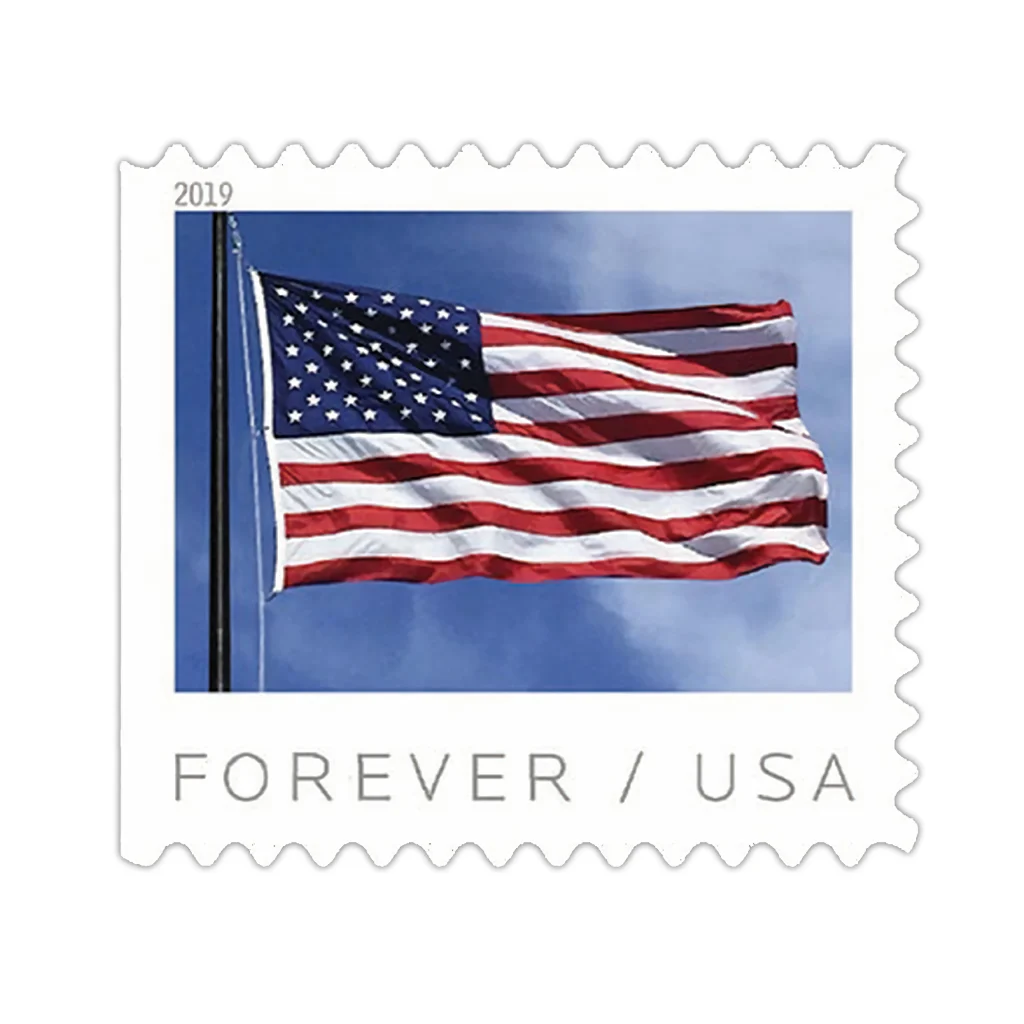
- American Flag Forever Stamp
- Liberty Bell Forever Stamp
- U.S. Patriotic Series
- Floral or Garden Series (simple, clean)
- Traditional Holiday Stamps (for Q4 mailings)
Avoid limited editions, special themes, or unusual artwork — they’re harder to verify, easier to counterfeit, and sometimes too “personal” for business mail.
A Few More Things Businesses Don’t Usually Think About (But Should)
1. Stamps are a hedge against inflation
Not dramatic, but real.
A small, quiet hedge that always pays off.
2. Stamps simplify budgeting
Buy once.
Use all year.
No surprises.
3. Stamps reduce operational friction
Running out of stamps mid‑month is a workflow killer.
Buying early eliminates that.
4. Stamps are tax‑deductible
They’re a business expense.
Simple as that.
5. Stamps don’t require storage conditions
No climate control.
No special handling.
Just a drawer.

Three Authoritative External Resources
- USPS pricing trends and updates — Washington Post
- Inflation and consumer cost analysis — CNBC
- U.S. business operations insights — Forbes
Why 2026 Is the Year to Act — Not React
If you’ve read this far, you already know the truth:
2026 isn’t about panic.
It’s about preparation.
It’s about understanding that stamps — tiny, quiet, unassuming stamps — can save your business hundreds or thousands of dollars if you treat them like the strategic asset they are.
And maybe that’s the real lesson here.
Sometimes the smartest business decisions aren’t loud.
They’re not dramatic.
They’re not even exciting.
They’re just smart.
And early.
And intentional.
Smart Buyer’s Guide to Discount Stamps in Bulk

Former USPS clerk with 25 years of service, now retired in Florida. She writes about Forever Stamps for the website, offering reliable insights on postal changes, discount opportunities, and practical mailing solutions for households.