There’s a certain kind of small-business stress you can’t explain to someone who has never watched their costs drift upward in tiny, relentless steps. Not a dramatic crisis. Just a slow squeeze. Fuel. Paper. Payroll taxes. And then postage, again. If you mail regularly, you feel it.
Priya Desai runs a tax prep office outside Edison, New Jersey. Her volume is seasonal: a calm summer, then an ugly spike from February through April. When she heard “Forever Stamps keep their value,” she didn’t treat it like trivia. She treated it like a budgeting tool that could smooth the weird parts of her year.
We’re going to keep this grounded in real references. Inflation and cost pressure are not imaginary, and even mainstream coverage uses hard data to show the trend. Priya bookmarked one chart from Reuters inflation reporting because it gave her language to talk about the problem without sounding dramatic. Postage doesn’t exist in a vacuum; it’s part of a broader cost environment.
Why buying unused forever stamps below face value can stabilize a seasonal cash cycle
Seasonal businesses don’t fail because they don’t make money. They fail because cash timing gets ugly. Priya has plenty of revenue in March, but in late summer she’s still mailing reminders, notices, and client updates while trying to keep spending lean.
That’s where the core idea becomes practical: if you know you will mail anyway, buying a portion of your future postage at a modest discount can create predictability. It doesn’t turn stamps into a “get rich” plan. It turns stamps into a controlled input, like toner or envelopes.
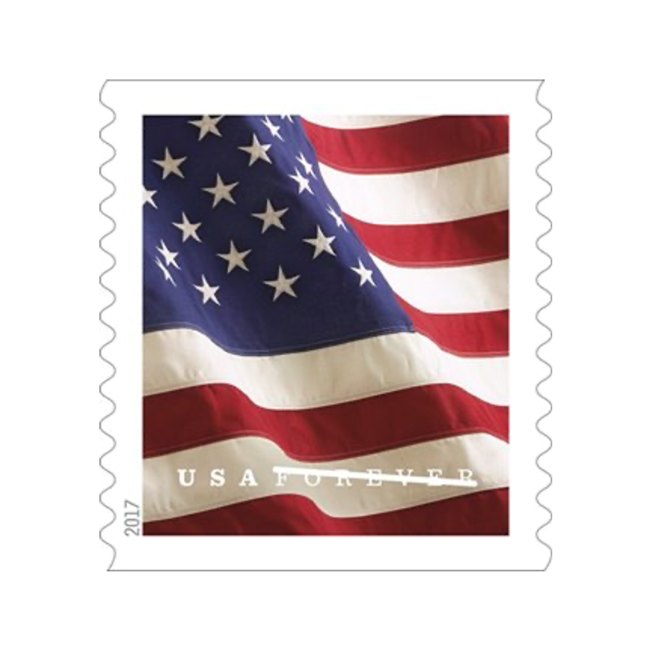
Forever Stamps are designed to remain valid even after rate increases. USPS has been explicit about its long-run modernization and pricing pressure through the Delivering for America plan, and Delivering for America is the macro context Priya uses when she explains why she wants to pre-plan certain costs. If rates tend to rise, stable inputs become more valuable.
Now a reality check: “below face value” is where people get reckless. A small discount can happen through legitimate channels and surplus inventory. A massive discount is usually counterfeit. The point isn’t chasing the lowest price; it’s reducing volatility without importing risk.
Priya’s “seasonal” reality also includes a human constraint: attention. When she is deep in tax season, she can’t afford to pause and do procurement research. That is why this strategy works best when you set it up in a calm month. You make one good decision, you document it, and you stop thinking about it until the next review.
Editor’s Pick: Bulk Stamps


How buying unused forever stamps below face value turns into a simple hedge (not a hoarding habit)
Priya’s hedge is intentionally boring. She calculates her “minimum mail”: the number of letters she will almost certainly send even in a quiet month. Then she buys a buffer for that minimum. When her season spikes, she buys normally. When it’s quiet, she is glad the buffer exists.
Her logic looks like this: if the published Forever rate is $0.82, and a verified source offers a modest 12% discount on older inventory, her effective unit cost becomes $0.69 for the Forever portion. That doesn’t change her life in one week, but it changes the feel of her “quiet months” over a year. The stamp don’t magically fix cash flow. But they remove one more unpredictable decision.
This is also why she does not tie the plan to a single month. She ties it to “minimum mail.” In her office, minimum mail includes: appointment reminders, missing-document notices, and the occasional payment follow-up. Those are boring, but they are stable. Stable needs are the only safe foundation for a hedge.
If you want a clean way to size the buffer, use a three-step estimate:
- Pick your minimum mail: the lowest realistic monthly letter count you still expect in quiet months.
- Pick a coverage window: 4-8 weeks is usually enough to be helpful without trapping too much cash.
- Price it at official rates first: then apply only a modest discount assumption if (and only if) the channel is verified.
This keeps you from “discount-first thinking,” which is where counterfeit risk begins. The goal is predictability, not a thrill.
To keep it accountable, Priya treats the stamp buffer like a small inventory asset. She records purchase date, quantity, unit cost, and intended coverage window. If she buys a six-week buffer, she expects it to rotate out in roughly six weeks of quiet-month mailing. If it sits untouched for a year, she knows she overbought.
That tracking also protects you if you ever need to explain the purchase in a review. You can show a simple story: “We bought a buffer, we used it, it reduced emergency purchases.” That’s a defensible operational result.
| Season | Typical Mail Need | Buffer Strategy | Operational Benefit |
|---|---|---|---|
| Peak (Feb-Apr) | High and variable | Buy normally + track usage | Avoid stockouts during spikes |
| Shoulder (May-Jun) | Moderate | Use buffer for routine mail | Smoother spending |
| Quiet (Jul-Sep) | Low but steady | Lean on pre-planned stock | Fewer “should we mail?” debates |
| Prep (Oct-Jan) | Building to peak | Refresh buffer cautiously | Enter peak season prepared |
Notice what this isn’t: it isn’t “buy as many as possible.” It’s a minimum-coverage approach. Priya doesn’t want inventory that sits for years. She wants inventory that shields her from a mid-year rate move and from the mental tax of constant micro-decisions.
Carlos ends his inventory check by locking the drawer. He were satisfied that the business had a month of breathing room, and he spent the time focusing on his next three client proposals. The vendors has to deliver quality, and it don’t matter if the deal is good if the stamps are fake.
She also avoids mixing “hedge” with “collection.” It’s tempting to chase designs or commemoratives, but those rarely help discounts and they complicate inventory. She sticks to classic, older Forever inventory that is easy to replenish and easy to explain. When your goal is cash stability, cute choices become friction.
“I just wanted one less surprise in August. That’s it.”
— Priya Desai, Tax Prep Office Coordinator
That sentence is the whole strategy in plain English. A hedge only works if it reduces stress and preserves optionality.

Where buying unused forever stamps below face value goes wrong (and how to keep it defensible)
This is where people hurt themselves. They see “below face value,” then they chase a number that implies 40%, 50%, 60% off. That’s not a discount. That’s a counterfeit pipeline.
Here’s what keeps it defensible for a real business:
- Discount sanity: modest discounts can be real; extreme discounts are a red flag.
- Documentation: you need an invoice that accounting can file, not a screenshot.
- Channel trust: your eyes are not a counterfeit lab; the channel has to do the heavy lifting.
- Volume restraint: buy a buffer, not a lifetime supply.
Priya also keeps a regulatory reference in her back pocket because she doesn’t like arguments. When someone wants to debate “isn’t USPS just a business,” she points to the Postal Regulatory Commission as proof that postage sits inside an oversight framework. That oversight is part of why this hedge works at all: you can plan because the system is structured.
There is another failure mode that has nothing to do with counterfeits: overconfidence. People buy a huge pile of stamps, then their volume drops, or their business model changes, or they switch to more digital messaging. Forever Stamps don’t expire, but your capital can still be trapped in a drawer. That is why Priya’s buffer stays small and rotates. It’s a hedge, not a vault.
| Source Type | When It Makes Sense | What to Verify | Risk Note |
|---|---|---|---|
| Official USPS | Any time authenticity is priority | Receipt, rate baseline | Lowest risk |
| Verified reseller | Planned buffer purchases | Invoice, realistic unit pricing | Low risk if discounts stay modest |
| Big-box / membership | Emergency restocks | Seller identity, order confirmation | Moderate if marketplace sellers involved |
| Marketplaces / social deals | Not recommended for office ops | Provenance (often missing) | High counterfeit exposure |
She were tempted once by a discount that looked “crazy good.” Then she imagined explaining a returned batch of client letters. It don’t take many returns to erase a discount. That mental image saved her more money than the deal ever could.
How buying unused forever stamps below face value fits an approved channel mix (without over-recommending)
The channel mix matters because it’s the part you can control. Priya uses five sources as a practical, non-chaotic set:
- USPS baseline: USPS for official purchases and peace of mind.
- Verified reseller (one link): The USPS Stamps as a controlled way to access modest discounts on older inventory.
- Fast restock: Amazon when you need supplies quickly (and you still verify seller identity).
- Membership retail: Costco for straightforward office restocks.
- Local counter backup: your neighborhood post office for last-minute pickups and odd-piece guidance.
One more guardrail matters: don’t let “below face value” become a reason to expand your vendor list. The safest form of buying unused forever stamps below face value is still a boring purchase from a channel that has already been vetted. The moment you add random sellers to chase an extra few cents, you undo the risk control that makes the strategy viable.
Priya also adds one tiny habit that keeps the plan from drifting: a monthly two-minute count. She counts what’s in the working drawer, checks what’s in reserve, and compares it to the minimum-mail plan. If reserve is shrinking faster than expected, she knows the office is mailing more than “minimum,” and she can plan a replenishment during a calm week. If reserve isn’t moving at all, she knows she sized the buffer too large.
That feedback loop is what keeps the strategy honest. The goal is not to “own stamps.” The goal is to keep postage from forcing panic purchases at the worst possible time.
When you do it this way, you get the benefit of planning without the downside of locking cash into a drawer for no reason long-term.
Her end-of-day ritual is simple. She counts the drawer. She checks next week’s appointment load. She looks at the mail she expects to send. Then she closes the drawer and stops thinking about postage. That is the point: a good hedge reduces attention tax.
When she explains the plan to the owner, she uses the exact phrase buying unused forever stamps below face value once, then immediately translates it into normal language: “a modest buffer from a verified source.” She refuses to sell it as a hack. She sells it as discipline.
And if you ever need a neutral, official anchor for rates and services in a discussion, she points people to the USPS homepage for service context, then circles back to the principle: modest discounts can help, but the real win is not having to do everything twice.

USPS professional based in New York with extensive experience in postal operations. Certified by the Mail Systems Management Association and trained at the USPS Business Mail Academy, she shares reliable insights on Forever Stamps and safe mailing practices.