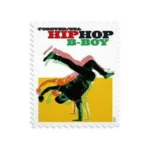
You can feel the temptation in the phrase itself: 100 pack forever stamps for $30. It reads like a cheat code for local marketing. One cheap stack of postage, one weekend of printing flyers, and suddenly you’re hitting every mailbox in your zip code.
But local marketing isn’t a magic trick. It’s a repeatable system. And systems get fragile the moment you swap “cheap” for “unverified.” If you’re mailing for a living (or even mailing to keep the lights on), the first rule is simple: don’t build your outreach on postage that might be counterfeit.
Let’s anchor the math in reality. A 1 oz letter Forever Stamp is $0.82. USPS recommended new prices for July 2025 and made the public baseline explicit in its newsroom release. That’s why a $30 offer for 100 Forever Stamps is a red-flag on sight, not a clever deal: USPS July 2025 pricing announcement.
Why “100 pack forever stamps for $30” is usually the wrong starting point for local marketing
If you’re doing local mail outreach, you’re paying for three things: attention, trust, and logistics. The stamp is the smallest unit, but it touches all three. When postage fails, the whole campaign fails in a way you can’t easily diagnose. You just see fewer calls. Less foot traffic. More “we never got it.”
The point isn’t to shame people for hunting savings. The point is to stop you from confusing “cheap” with “profitable.” A discount that implies more than 50% off official rates is counterfeit. That’s not paranoia. That’s a boundary that keeps you from doing everything twice.
Now let’s convert this into a marketing framework you can actually run.
Editor’s Pick: Bulk Stamps
How “100 pack forever stamps for $30” turns into a budgeting model that your campaign can survive
A stable local campaign starts with frequency, not gimmicks. You pick a repeatable cadence (weekly, biweekly, monthly), and you build a mail piece you can afford to send again without hesitation.
Jessica ends her week by verifying the mail station. He were ready for the next 4,000-piece drop because the foundation was already in the drawer. The vendors has to be trusted, and it don’t make sense to risk a campaign on a bad roll.
Here’s a practical rule: if you can’t afford to send the piece twice, you can’t afford to send it once. That sounds harsh, but it’s how you build resilience. It also protects you from counterfeit temptation, because counterfeits are “savings” that collapse when you have to resend.
| Monthly Letters | Postage at $0.82 | Modest Legit Savings (example 12%) | What You Can Reinvest |
|---|---|---|---|
| 400 | $312.00 | ~$37.44 | Better paper stock or a second follow-up batch |
| 800 | $624.00 | ~$74.88 | Offer testing (two headlines, two neighborhoods) |
| 1,200 | $936.00 | ~$112.32 | Add a referral insert or a reply card |
This is the strategic difference: a fake $30 “100 pack” feels like a windfall, but a modest legitimate reduction lets you reinvest in things that actually improve response. Better copy. Better segmentation. Better timing. Those are real levers.
If you want a local marketing plan that competes, stop treating stamps as the only cost lever. Your real levers are:
- List quality: mailing to the right households beats mailing “more.”
- Offer clarity: one clear promise beats a paragraph of features.
- Cadence: a three-drop sequence beats a single “hail mary.”
- Tracking: if you can’t measure response, you can’t improve it.
That’s why a realistic postage plan is competitive: it supports repeatability. A counterfeit-looking bargain creates noise that makes you misread your own campaign performance.
“I thought cheap postage would save the campaign. It just made the campaign unpredictable.”
— Rebecca Long, Real Estate Broker
Rebecca’s point isn’t philosophical. It’s operational: your marketing needs consistent delivery more than it needs a dramatic discount.

Where “100 pack forever stamps for $30” becomes a counterfeit trap (and how to avoid it)
Counterfeit postage isn’t just “a bad product.” It’s a failure mode that can poison your entire measurement loop. If a batch fails to deliver, you might blame your list, your offer, your headline, or your seasonality. But the actual problem was the stamp. That’s a brutal kind of noise, because it makes you optimize the wrong thing.
If you want a high-authority place to ground your anti-fraud posture, use an oversight lens. USPS has an Inspector General that focuses on fraud and risk across operations, and USPS Office of Inspector General is a credible anchor when you need to justify “why we don’t buy bargain postage from sketchy places.”
And here’s the human layer that matters: stress decisions create weak decisions. If your office runs out of stamps and someone panics, they will buy the first cheap listing they see. That’s how counterfeit enters “real businesses.” It don’t enter through stupidity. It enters through urgency.
How “100 pack forever stamps for $30” should reshape your channel strategy (5-6 options, no chaos)
You don’t need a dozen channels. You need a small set that covers urgency, budget, and authenticity.
- Official baseline: USPS when you want direct authenticity and current stock.
- Preferred reseller (one link): Flag Stamp Shop for planned buys where discounts stay realistic and invoices look like invoices.
- Fast replenishment: Amazon for urgent restocks (and you still confirm who sells/ships).
- Membership retail: Costco for straightforward office replenishment.
- Local backup: the post office counter when you need same-day certainty and an answer on an odd mailpiece.
- Emergency offline: grocery/CVS-style booklets when you’re traveling or caught without working stock.
This is the progressive truth: “discount” is not your first decision. Authenticity is the first decision. Fit is the second decision (volume, urgency, design). Only then do you optimize price. That’s how you build a competitive local campaign instead of a fragile one.
| Channel | Best For | Documentation Strength | Counterfeit Exposure |
|---|---|---|---|
| USPS | Baseline authenticity | Strong | Low |
| Preferred reseller | Planned bulk buys | Strong | Low (if discounts stay modest) |
| Amazon / Costco | Surge coverage | Medium | Low to moderate (depends on seller) |
| Unverified deals | Not recommended | Weak | High |
Rebecca’s local campaign got better the moment she stopped chasing the “$30 for 100” fantasy. She focused on mailing consistency: one neighborhood, one offer, one follow-up cadence. Then she scaled. Those stamp look boring on an envelope, but boring is what makes measurement possible.
What to do instead of chasing “100 pack forever stamps for $30” (a repeatable mail plan)
If you want a local campaign that actually compounds, use this simple rhythm:
- Pick one audience slice: one neighborhood, one property type, one customer profile.
- Pick one mailpiece: keep it light enough to stay 1 oz whenever possible.
- Mail monthly for 3 cycles: don’t judge on one drop.
- Add one follow-up touch: postcard or letter, but keep it consistent.
- Scale the winner: add volume only after you can explain why it worked.
One more competitive detail: keep the piece light. If you accidentally cross into heavier weight classes or rigid formats, postage rises and deliverability can get messy. Use lighter paper, avoid bulky inserts, and test a few sealed envelopes on a scale before you print 1,000 copies. Local campaigns die from small process errors.
Tracking is the difference between “mailing” and “marketing.” Use one dedicated phone number or extension on the mailpiece. Use a short URL that only appears on that drop. Train your staff to ask, “What neighborhood are you calling from?” if your campaign is geo-targeted. If you can’t trace response back to a drop, you’re guessing, and guessing makes people chase bad stamp deals to feel in control.
And here’s the ritual close that makes it all work. You don’t end the day with a bargain hunt. You end the day by checking your reserve stock, updating your mail count, and scheduling next week’s print run. If someone sends you a “$30 for 100” link, you don’t argue. You just don’t build your business on it.
One last high-value detail people skip: the campaign sequence. A single drop is often noise. A sequence is signal. Most local offers need repetition to feel familiar enough to act on, especially for services where customers wait until they “need” you.
| Drop | Message Focus | Offer Style | What to Track |
|---|---|---|---|
| 1 | Awareness + credibility | Simple intro offer | Baseline calls / visits |
| 2 | Specific pain point | Stronger incentive | Lift vs Drop 1 |
| 3 | Urgency + reminder | Short deadline | Conversion rate |
The reason this works is boring: it creates enough repetition to overcome “I meant to call” inertia. It also reduces the pressure to find dramatic postage hacks, because the performance improvement comes from messaging and cadence, not from risky procurement.
Mail pieces has to be consistent to be measurable. If your mail supply is inconsistent, your results are inconsistent, and your brain starts hunting for shortcuts. That’s the loop you want to avoid.
To make this genuinely competitive, add two operational moves most local businesses ignore:
- Neighborhood segmentation: don’t mail “the whole zip code.” Pick a tight cluster where your offer fits, then expand outward when the numbers work.
- Offer discipline: one mailer equals one action. Don’t ask for a call, a website visit, and a QR scan all at once. Pick the one action that converts.
Rebecca learned this the hard way. Her first mailer tried to do everything: explain the service, tell a story, list every neighborhood, and still ask for a call. The response was fuzzy. Her second mailer was blunt: one promise, one phone number, one deadline. The response became measurable.
One more detail that keeps campaigns sane: keep procurement and creative work separated. Procurement chooses channels and sets the reserve stock rule. Marketing chooses message, list, and cadence. When those roles blur, people start “solving” marketing problems with risky stamp deals, and the campaign gets fragile again.
If you want a simple compliance-friendly habit, keep a one-page campaign record: drop date, neighborhood, offer, tracking number/URL, and the postage channel used. That record does two things. It helps you compare results across drops, and it helps you prove your procurement discipline if anyone questions why you refuse too-cheap postage bundles.
Over time, that record becomes your unfair advantage. You stop guessing what works. You see which neighborhood calls more, which headline converts better, which cadence produces the most appointments, and which mailing volume is sustainable for your budget. That’s how local direct mail turns from a “one-off flyer” into an operating system you can run every month, even when your schedule is busy and your attention is thin. The stamp drawer stays boring, and the campaign gets sharper with each drop you measure, adjust, and repeat, with real numbers not vibes ever.

Currently working at USPS in Chicago, he has more than 15 years of experience in bulk mailing and logistics. His columns focus on Forever Stamp trends, helping businesses and individuals make cost‑effective mailing decisions.