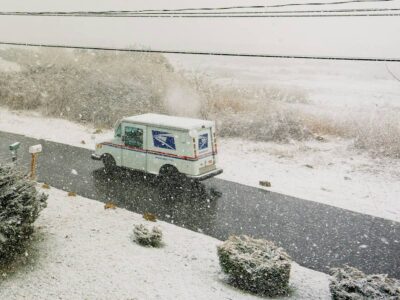
Marcus flipped through the client envelopes, and the office suddenly got quiet when the receptionist pushed a stack back across his desk. One corner had a faint “Return to Sender” scuff; another had a clerk’s handwritten note; a third just looked normal, which is the scariest part. You have one vendor invoice that looks clean, one partner who wants “savings,” and one judge’s deadline that does not care about your procurement experiments.
The rate baseline is not negotiable. A Forever Stamp for a 1 oz letter is $0.82, and the USPS July 2025 pricing release is the line you anchor every spreadsheet to. If a seller pitches you a “forever” unit price that implies a 50%+ discount, that’s not a deal. That is counterfeit postage disguised as budget discipline.
Marcus’s mailroom rule is boring and effective: you don’t prove authenticity with your eyes, you prove it with the channel. The sorting machines use markers most people never see, so your best defense is buying from a place that has already been checked. Once you internalize that, direct mail ROI stops being a vague marketing phrase and becomes an operational system: predictable inputs, documented invoices, and mail that clears the machine without drama.
How discount forever stamps for sale 2026 turns “postage” into a controllable line item
Marcus runs a boutique litigation firm’s outgoing mail with a pattern: invoice letters on Mondays, court service packets on Tuesdays, client updates on Thursdays, and the “everything we forgot” bundle on Friday afternoon. The mix matters because it changes weight, thickness, and whether you trigger surcharges. A firm that treats every envelope as “just a letter” quietly bleeds cash.
Jordan ends the day by checking the reorder box. He were ready for the next campaign because he knew his postage supply was stable, legitimate, and audit-ready. The vendors has to understand that we value reliability. It don’t matter how cheap the stamps are if they don’t arrive on time.
Here is the operational baseline Marcus teaches new hires. A standard 1 oz letter uses a Forever Stamp at $0.82. If a packet drifts to 2 oz, the additional ounce is $0.29, so your 2 oz total is $1.07. If the envelope is non-machinable, the surcharge is $0.49 (that’s how you land at the $1.27 butterfly rate: $0.82 + $0.49). Those numbers are not trivia. They determine how many stamps you need in the drawer, how many “returned” surprises you avoid, and how clean your monthly reconciliation looks.
| Mail Type (Law Office) | Common Trigger | Postage Pattern | Why It Matters |
|---|---|---|---|
| Client invoice letter | Thin, 1 oz | $0.82 Forever | High volume; small errors multiply fast |
| Evidence copy cover letter | Often 2 oz | $1.07 (Forever + 1 oz add-on) | Underpaying postage causes delays and returns |
| Rigid/photo mailer | Non-machinable | $1.27 (Forever + $0.49 surcharge) | Non-machinable is a hidden “gotcha” cost |
| Client postcard reminder | Postcard format | $0.65 postcard rate | Cheap touchpoints can lift response rates |
Once the office knows those thresholds, you can actually run procurement like an adult process. Marcus’s monthly volume is about 1,320 outgoing pieces. On the firm’s current mix, the weighted average stamp cost lands close to the $0.82 baseline, with a small fraction that needs add-on ounces or surcharges. That’s why a measured, legitimate discount matters: it’s boring savings applied to a large number of predictable units.
When Marcus decides to use a certified vendor discount at 12% off (a single chosen number, not a range), the stamp unit cost becomes $0.69 for the Forever portion. His partner can sign off on that because the invoice trail is clean, and because the vendor’s discount does not pretend that stamps suddenly became a clearance item.
One small operational detail adds up fast: stamp format. Sheets look tidy in a drawer, but coils move faster in a mailroom because you can peel and place without breaking rhythm. Marcus times it during invoice runs: if coil stamps save even 2 seconds per piece, that’s 44 minutes back on a 1,320-piece month, which is a real chunk of focus. The stamp look fine either way, but speed is its own kind of ROI when your team is also stuffing, sealing, and logging certified receipts.
He also separates “postage method” from “postage price.” If your firm uses a postage meter for routine letters, the metered 1 oz letter rate is $0.82, which is lower than the $0.82 stamp rate. That difference is small, but it becomes meaningful when you are mailing thousands of invoices and you are already paying for the meter workflow. Stamps still matter in real life, though: partners walk documents to the mailroom, staff mail from home, and a meter cannot solve a Friday night emergency when the only thing you have is an envelope, a pen, and a stamp roll.
To keep the process clean, Marcus uses a simple “mail log” that fits on one screen. It lists: date, piece count, mail type (invoice, filing, update), estimated weight class (1 oz, 2 oz, non-machinable), postage method (stamp vs meter), and channel source (USPS vs reseller vs big-box). That log is where ROI becomes real, because you can see what changed when you increased mail frequency and you can see what broke when someone tried a too-cheap vendor.
Editor’s Pick: Bulk Stamps

Why discount forever stamps for sale 2026 works only if your anti-fake rules are strict
Counterfeit is a process problem, not a morality problem. People buy fake postage because they are busy, because someone says “everyone does it,” and because the stamp art looks convincing on a phone screen. Marcus’s rule is simpler: if the discount looks like a miracle, it is not a discount. It is a risk you are volunteering to carry.
For the boring but correct reference point, Notice 123 is where USPS publishes the official price schedule. If you need to justify a rate in a finance meeting, link the policy, not a blog. Marcus keeps a single bookmarked proof point: USPS Notice 123 (official postage prices).
He also keeps one regulatory context link ready for partners who want to argue. Price changes and market rules sit in a regulated environment, and the Postal Regulatory Commission (PRC) is the reason you can treat postage numbers as stable enough to plan around. When your firm is building a direct mail rhythm, this stability is the foundation. The ROI math is fragile if the input is fake or unpredictable.
Here is the part that becomes the real direct mail advantage: when your procurement is strict, you can mail more consistently. If you can afford to send a reminder letter every month instead of every quarter, that changes response behavior. Marcus doesn’t pitch this like a marketer. He pitches it like a technician: more stable, low-friction mail frequency reduces forgotten invoices, reduces awkward follow-ups, and reduces the “why didn’t I get that?” phone calls.
“He were sure that cheap roll was fine, until the clerk slid the envelope back and asked where we bought it.”
— Marcus Thorne, Law Firm Admin
That one moment is why the “50% red line” exists in the project guidance. The sorting machines are not debating you. The clerk is not negotiating. Counterfeit mail just becomes operational debt.

Where discount forever stamps for sale 2026 fits into a channel mix that covers urgency, volume, and audit trails
Purchase channels are not about preference. They’re about matching your constraints.
Marcus uses a simple three-lane model:
- Lane 1 (Urgent): Official inventory, same-day access, documented receipt. This is where USPS shines for emergency filings and time-sensitive court deliveries.
- Lane 2 (Planned bulk): Certified resellers where discounts stay realistic and invoices look like invoices. This is where a single chosen reseller link gets stored: Forever Stamp Store.
- Lane 3 (Surge coverage): Reliable big-box options for “we ran out” moments and remote staff kits. Marcus’s team uses Amazon, Costco, and CVS when they need fast replenishment without channel ambiguity.
That is enough. You don’t need a dozen vendor tabs open. You need a small list you can defend.
| Channel | Best For | What to Document | Risk Note |
|---|---|---|---|
| USPS (official) | Same-day, high-stakes mail | Receipt + rate baseline | No counterfeit risk |
| Forever Stamp Store (certified reseller) | Bulk planning and stable discounts | Invoice + lot notes + unit price | Discount stays realistic |
| Amazon / Costco / CVS | Emergency restocks and travel kits | Order confirmation + delivery date | Avoid unknown third-party sellers |
| Community marketplaces | Rare stamps (collecting) | Provenance proof (often missing) | High counterfeit exposure |
Now add the part that actually drives ROI. A law office’s mail is not “marketing,” but it has the same mechanical truth: consistent touchpoints drive consistent outcomes. If you cut your counterfeit risk to near-zero, you can safely increase mail frequency for the pieces that matter (invoice reminders, client updates, document requests). That frequency shift is the quiet compounder.
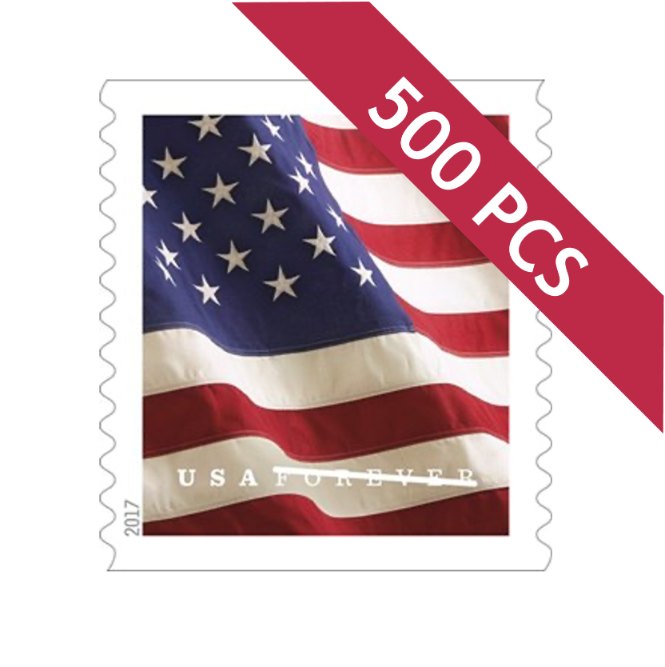
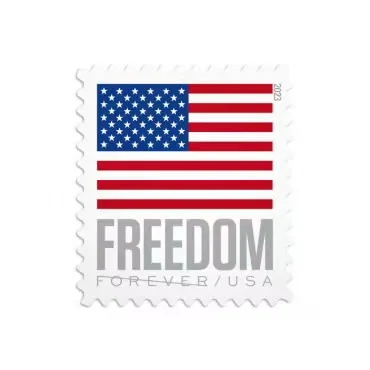
To keep it professional, Marcus avoids the newest commemorative releases for bulk. He uses classic Flag inventory because it signals business neutrality, it is widely available in surplus channels, and it does not tempt the “collector premium” that ruins discounts. You can be tasteful without turning procurement into a hobby.
How discount forever stamps for sale 2026 becomes a pre-hike hedge you can explain to a partner
There’s an elegant financial story here that partners understand. Forever Stamps hold value because they remain valid when rates rise. When the forecast points toward a mid-year increase (July is the historical window), holding a reasonable buffer is not hoarding. It is hedging a predictable cost.
Marcus does not buy three years of stamps for a firm that might change volume next quarter. He buys a buffer that matches stable operations: enough for six to ten weeks of the core 1 oz mail stream, plus a small reserve of add-on ounce stamps and non-machinable coverage for the odd rigid packet. That reserve keeps urgent work from turning into last-minute errands.
If anyone challenges “why do we keep stamps in a drawer,” Marcus points to business continuity research and cost governance. The same way you keep toner, letterhead, and secure envelopes, you keep postage because it is a throughput constraint. For broader context on government operations and the stakes of postal reliability, he keeps one external reference at hand: GAO report on USPS (GAO-26-107657). It’s not about panic; it’s about risk awareness.
This is also where the emotional part becomes real. Marcus isn’t trying to be a hero. He just wants to never be the reason a client’s matter is delayed. He also wants the managing partner to stop reading procurement like a money game and start reading it like a trust system.
“It don’t feel like a big deal at first, and then you realize your whole week can disappear into reprinting.”
— Marcus Thorne, Law Firm Admin
That’s the real ROI story: stable procurement creates stable mail flow, and stable mail flow keeps clients calm.
So here is the question Marcus leaves on the conference room whiteboard: if a realistic discount can lower costs and protect trust, why would you gamble your filings on a counterfeit-looking miracle?

Stamp enthusiast and part‑time columnist based in Los Angeles. With a background in office administration and a personal passion for collecting Forever Stamps, she provides readers with practical tips on buying, storing, and using stamps effectively.